The Animation Debate: Settled by Data
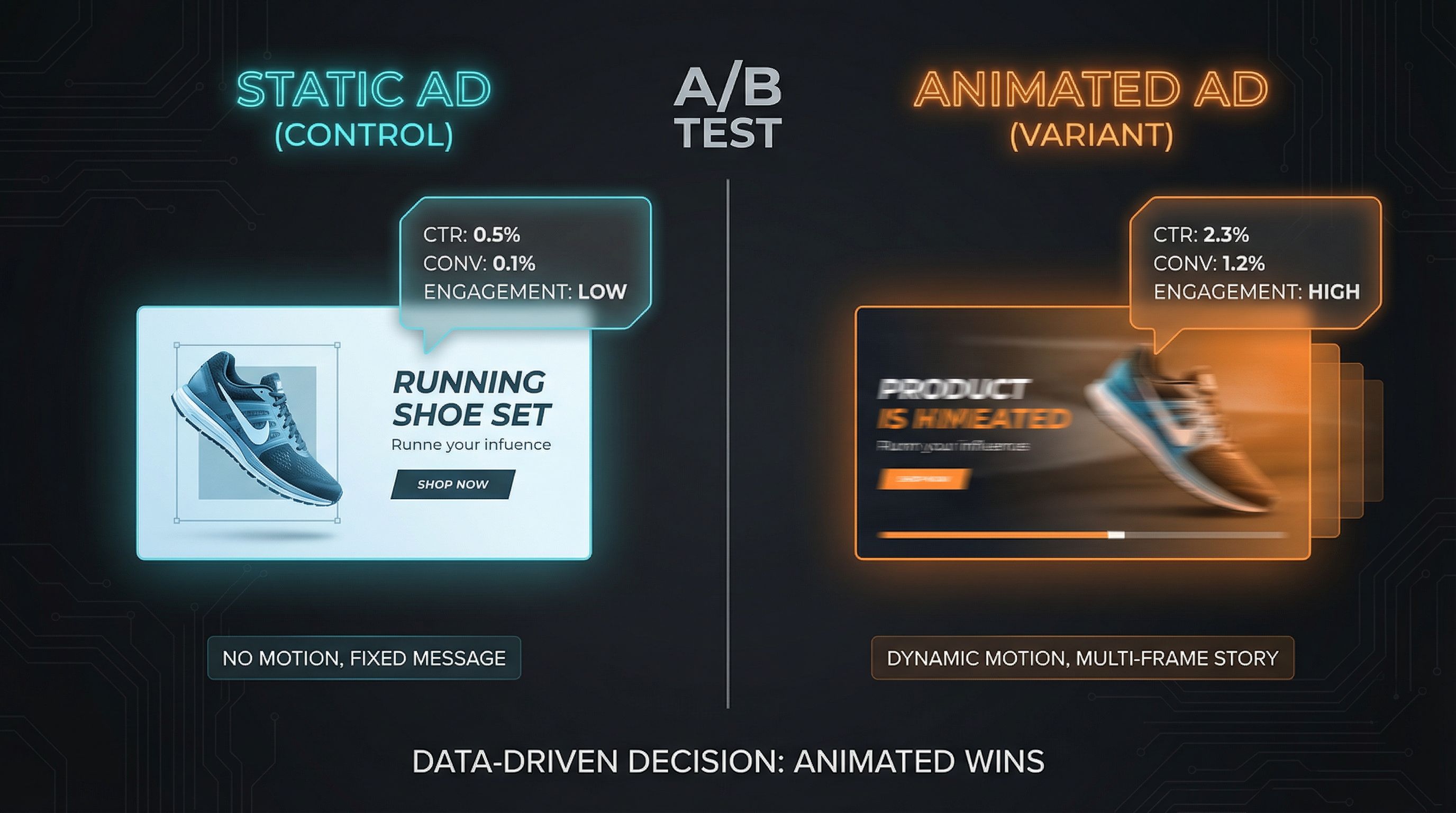
It's one of the most common questions in digital advertising: should my banners be animated or static? After analyzing performance data across 25,000 campaigns, we finally have a definitive answer.
The short version: It depends (but we'll tell you exactly on what).
Overall Performance: Animation Wins... Mostly
Across all campaigns analyzed, animated banners showed:
- +34% higher CTR than static banners
- +21% higher conversion rate post-click
- +28% higher brand recall in follow-up surveys
But averages hide crucial nuances. Let's break it down.
When Animation Dominates
Social Media Feeds
Animation's advantage is most pronounced in scroll-heavy environments:
- Instagram Feed: +47% engagement for animated
- Facebook Feed: +38% engagement for animated
- TikTok: Animation expected, static looks out of place
Movement captures attention in fast-scrolling environments where static images become wallpaper.
Retargeting Campaigns
For users who've already engaged with your brand:
- Animated ads refreshed attention: +52% view rates
- Static ads triggered banner blindness faster
- Animation extended campaign lifespan by 40%
New Product Launches
When introducing something new:
- Animation allows micro-storytelling (problem → solution)
- +44% higher information retention
- Better at communicating multiple features
Lifestyle/Emotional Branding
Campaigns focused on feeling rather than features:
- Animation creates emotional resonance
- +56% higher brand sentiment scores
- Particularly effective for travel, fashion, luxury
When Static Wins
Display Network Placements
On content-heavy websites:
- Static ads loaded faster: +23% viewability
- Animated ads often flagged as distracting
- Static CTR sometimes higher in right-rail placements
Performance Marketing (Bottom-Funnel)
When users are actively shopping:
- Static ads with clear pricing/offers: +18% conversion
- Animation can delay comprehension
- "Less is more" for deal-focused messaging
B2B Advertising
Professional audiences:
- Subtle animation acceptable, flashy is not
- Static felt more credible: +26% in click-to-lead
- LinkedIn specifically: static outperformed by 12%
Quick-Glance Placements
Very small formats or brief exposure:
- Static delivers message faster
- Animation may not complete before scroll
- Small formats: static +31% CTR
The Goldilocks Zone: Subtle Animation
The highest performers weren't fully animated or fully static—they lived in between.
Subtle animation characteristics:
- Single element in motion (logo pulse, CTA glow)
- Smooth, professional transitions
- 3-5 second loops
- Motion that guides attention to key elements
Performance:
- +41% vs. static
- +8% vs. fully animated
- Lower production cost than full animation
Animation Best Practices (Backed by Data)
Optimal Loop Length
- 3-5 seconds: Optimal performance
- Under 3 seconds: Feels rushed, lower comprehension
- Over 7 seconds: Attention drops off
First Frame Matters Most
- Assume many viewers see only frame 1
- Lead with your key message
- Animate to enhance, not to reveal
Motion Direction
- Left-to-right motion: +12% for Western audiences
- Eye-line toward CTA: +18% click rate
- Avoid motion that leads off the banner
Speed & Easing
- Smooth easing: +15% vs. linear motion
- Fast animation: higher attention, lower comprehension
- Slow animation: higher comprehension, lower attention
Platform-Specific Recommendations
Meta (Facebook/Instagram)
Use animation. The feed algorithm favors video content, and animated banners qualify. Expect 15-20% more impressions for animated.Google Display Network
Test both. Performance varies dramatically by placement. Create both versions and let Google optimize.Programmatic
Lead with static for efficiency. File size matters. Use animation selectively for premium placements.Cost-Benefit Analysis
Static Banner
- Production cost: $50-200
- Quick to iterate
- Universal compatibility
- No load time concerns
Animated Banner
- Production cost: $150-500 (traditional)
- Production cost: $10-50 (AI-generated)
- Higher engagement potential
- Some platform limitations
The AI Advantage
AI-powered animation (like AdMark Studio) changes the math:
- Create animated variants in seconds
- Marginal cost approaches zero
- Test both without budget constraints
The Verdict: Test, Don't Guess
Our data supports these guidelines:
But your specific audience may differ. The real answer is to test both for your campaigns.
How to Test Effectively
Same Creative, Different Format
Create static and animated versions of the same design to isolate format impact.
Sufficient Sample Size
Run until you have 1,000+ impressions per variant minimum.
Platform Separation
Test on each platform independently—results don't transfer.
Measure What Matters
CTR is easy to track, but conversion rate often tells a different story.
Conclusion
Animation generally outperforms static, but context determines everything. The platforms where you advertise, the stage of your funnel, and your audience's expectations all influence results.
The best approach: create both variants cheaply (using AI), test systematically, and let data guide your strategy. The animation debate isn't about choosing a side—it's about knowing when to use each tool.
Lisa Wong
Performance Marketing Manager
Lisa manages multi-million dollar advertising portfolios and obsesses over creative performance.